
Global rehab demand
An ageing population, injury recovery and chronic conditions keep physiotherapy relevant across healthcare systems.
NCAHP aligned · 5 years including internship · Hyderabad campus
Explore whether Physiotherapy is the right fit for you, with BPT admission 2026 guidance, BPT eligibility, fee and syllabus snapshots, and a conversation about rehab, movement science and international pathway options after BPT.
Leave the essentials. Admissions will call back with fees, eligibility and pathway guidance.
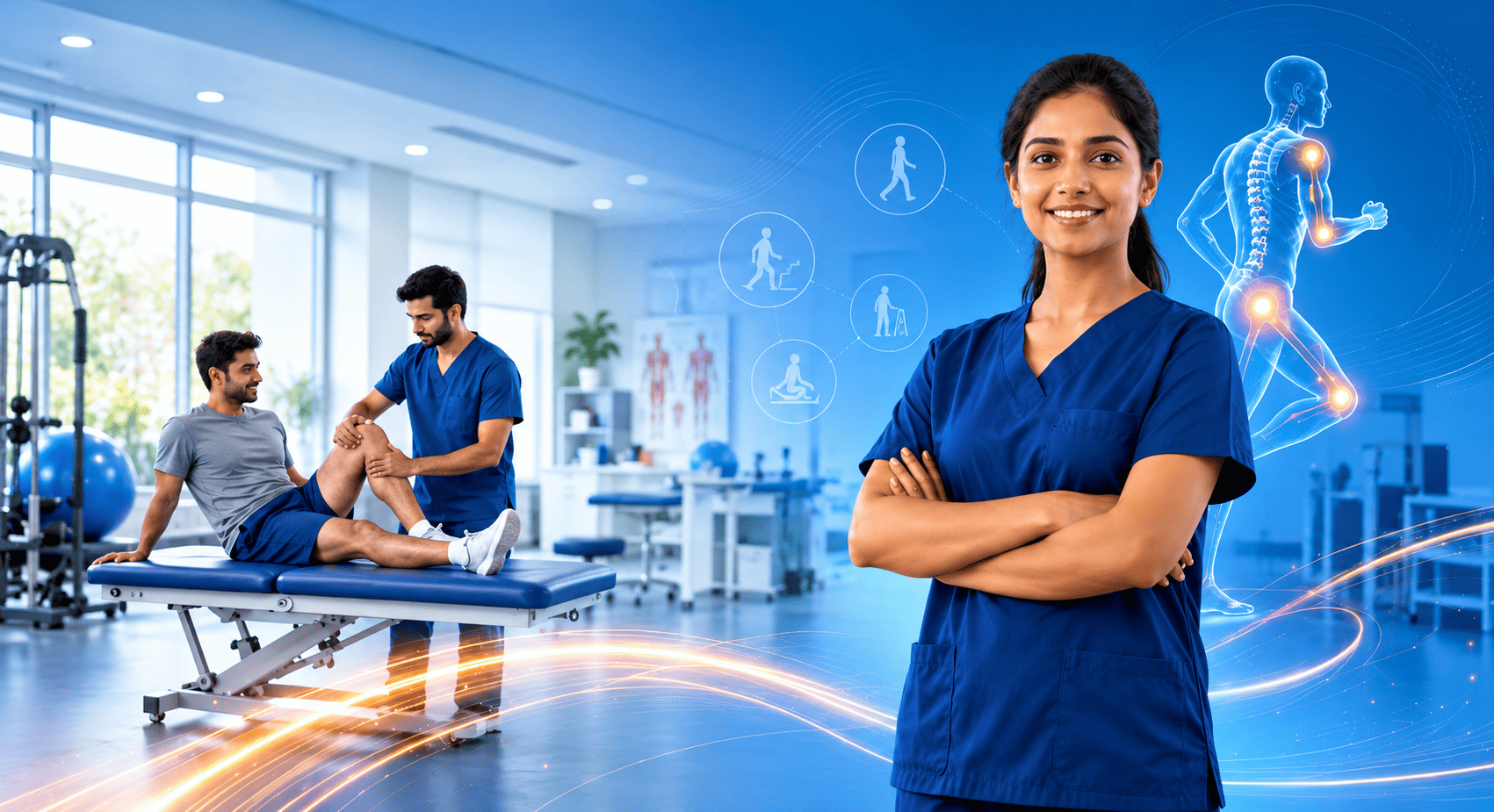 Rehabilitation careers become clearer when students can picture the work
Inside the BPT path
Physiotherapy is a fit for students who want science, movement, clinical reasoning and direct patient interaction. The decision becomes stronger when families can connect the degree to visible rehabilitation outcomes and long-term healthcare demand.
Why BPT now
For students comparing allied health degrees, BPT stands out when the work, internship pathway and rehabilitation identity are clearly explained before application.
An ageing population, injury recovery and chronic conditions keep physiotherapy relevant across healthcare systems.
Students who prefer movement science, exercise-based recovery and patient progress tracking often connect with BPT early.
Parents can understand eligibility, fees, internship structure and career direction before making the decision.

Career directions
The value of BPT is not limited to one clinic role. Students should see the breadth of rehabilitation practice before choosing the degree.
Support recovery after injuries, surgeries and mobility-related conditions in hospital and clinic environments.
Align toward performance support, return-to-play planning and exercise-based recovery work.
Work with long-term functional improvement, developmental needs and patient-centred therapy planning.
Physiotherapy also extends into inpatient rehab, outpatient care and community mobility support.
Students often explore future pathways in the UK, Australia, New Zealand and Gulf regions with later registration steps.
Parent decision lens
Families evaluating BPT want confidence in the student’s interest, the internship journey, the physical nature of the work and the long-term career value of rehabilitation practice.
 Built for student and parent enquiries
Admissions next step
Get the essentials first, then make an informed choice with an admissions conversation tailored to the student.
Common questions
BPT questions students and parents ask before applying.
Students who meet 10+2 with Physics, Chemistry and Biology (PCB / PCMB) can discuss their eligibility with admissions.
BPT is a five-year program, including a one-year internship that helps students transition from academic learning into supervised physiotherapy practice.
Career directions include musculoskeletal and orthopaedic rehab, sports rehabilitation, neuro and paediatric rehab, hospital and community practice, and later international registration planning.